Sermon for the Parable of the Wheat and Weeds – Matthew 13:24-30, 36-43
So, how many of you would call yourselves farmers or gardeners? Well, blessed are you! I don’t really have a green thumb, but every once in a while I try to grow some flowers or something. And every time I learn the same thing. I’m not very good at growing flowers or vegetables, but I’m REALLY good at growing weeds. I don’t even have to try. In fact, the less work I put into it, the more weeds I get. It’d be great if that’s what I was going for, but it’s not. Please tell me I’m not the only one who has that experience. But there’s something else – when I do get all responsible and try to weed, I have a lot of trouble telling the difference between weeds and not-weeds. Sometimes it’s obvious – even I know what a thistle looks like. But after a while everything just looks the same. I don’t know what to pull out.
That’s kind of the basic problem in Jesus’ parable today. A farmer sows wheat in a field, but when it finally comes in, bonus! Two crops. Wheat AND weeds. You know, last week it was all about seeds that DON’T grow, and weeds that choke, and how rare a good harvest was. But that’s not our situation here. There really is a crop of wheat, and everyone sees it, and it’s totally abundant, and the weeds DON’T choke. That’s good news! But with all these weeds everywhere, how do you get the wheat without killing yourself or giving up in frustration?
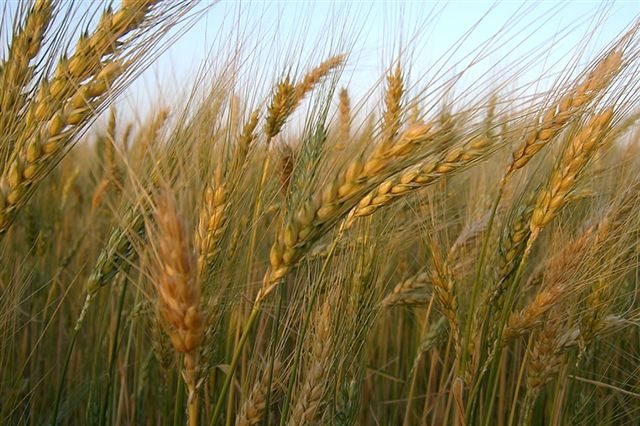
Now, here’s the thing – these aren’t just any weeds. The text is specific. This is darnel. Our ancient brothers and sisters used to call it “false wheat” because when it’s growing and immature it looks just like wheat. You can’t tell the difference. If you could, you would have weeded it out and you wouldn’t have this problem at harvest time. But by the time of harvest, it’s really obvious which is which. They don’t look the same anymore. But by this point, it’s just like Jesus says – the roots are so intertwined that there’s no reasonable way to separate wheat from darnel. So you’re stuck. The problem gets worse – darnel is poisonous. A little bit causes a sort of drunkenness. More will kill you. But if you’re a farmer in the day, you’re just scraping by. You can’t really abandon your crop. You’re going to harvest the best you can, hoping to filter our as much darnel as you can, but it’s not 100%. So someone’s pretty much guaranteed to eat your bread and get sick. It happened all the time. Ancient botanists wrote about it. They knew.
This matters, because when modern translations just say weeds, we think this is just some kind of basic quality problem, like the wheat’s just not as good as it could be. A preacher friend was discussing this on Facebook and I saw this response – “weeds are not bad or purposeless. They are simply planted in the wrong place. I don’t like the dandelions in my lawn, but they are edible and can be a good in a salad. Even the unwanted things can be redeemed.” But that’s not the situation at all. We’re not talking about the diversity of wheat. We’re talking about tainted wheat and a loaf of bread that can indeed kill us, and we don’t quite know what to expect from that innocent piece of toast in our hands. Do you feel lucky?
But Jesus isn’t just talking about bread or wheat. Jesus says he sows good seed, and the field is the world, and the good seed are the children of the kingdom and the weeds are the children of the evil one. And then he talks about judgment – the weeping and gnashing of teeth that none of us wants to hear about. But that’s jumping ahead. The point is that Jesus talks about darnel because of all that time spent growing, where you can’t tell the difference between wheat and darnel. And then we realize he’s talking about our whole lives, and the infinite ways that we try to do all the obvious right things. We absolutely look like wheat now, yet we inevitably hurt ourselves and others anyway. The road to hell is paved with good intentions. Our lives reap darnel and we just don’t understand why. And if we can’t stop ourselves, yet judgment surely comes, then weeping is all that we have left. We’re not weeders. We’re the ones being weeded.
Except, that’s not the end of the story. What’s the very first thing Jesus says? The one who sows the good seed is the Son of Man; the field is the world, and the good seed are the children of the kingdom. Folks, Jesus is always sowing seed because that’s the only thing he does. He always and only sows life in us, by taking away our death and dying it on the cross, for us. His accusers saw a rank weed, a man who loved prostitutes and tax collectors and criminals. They heard a blasphemer who dared to call himself the Son of God. And they thought they weeded him out just like the servants in the parable. But the thing is, Jesus became the biggest weed of all, just so that we would be wheat. Because after three days Jesus is risen from death, all so that we would see God’s full, unconditional love for us and for all people. We don’t hear blasphemy – we hear Jesus declare the total forgiveness of all our sin and it’s all true. Brothers and sisters, we have become pure wheat even though we’re weeds.
That’s why Jesus talks about darnel. Because we can’t tell the difference between wheat and weeds, until it’s too late. Except it’s never too late for God. But it’s hard. Faith fills us and causes us to see all kinds of suffering and injustice in the world that we didn’t see before. But we also see the power of God breaking through all that. Nothing can surpass what God can do. And that’s when we finally realize, if you want to see wheat, you look for weeds. That’s where you always find God. You look for the weeds because you know God is doing something to them, and God is NOT casting them away. The world labels countless people as irredeemable weeds and tries to cast them off – but we know the truth that no one is beyond God’s redemption. After all, God in Jesus has redeemed us, even before we realized we needed it, in the waters of our baptism.
This is why Jesus dares to talk about weeping and gnashing of teeth, because he KNOWS won’t be fooled. We have nothing to fear. Here’s what we hear – the end of the age is the great harvest. The righteous will shine like the sun in the kingdom of their Father. Brothers and sisters, that means everyone. But we have all kinds of trouble imagining it. We encounter people who hate and hurt and have no use for God at all, like nothing could ever change that. But by faith, we hang everything, everything on the fact that we have a good and gracious and patient Father who will get his way. And you know what God wants. God wants ALL of us. Them, us, everyone. All the wheat, no matter the weeds. After all, when has God ever done anything halfway?
So what does that mean? We don’t have to weed. We don’t have to judge ourselves or anyone else. We can let God worry about all that. And we can let God make everything we freely say and do to become the way that God tends to the care of the whole world, through us. Oh, we still mess up. We still sow weeds. We make mistakes all the time, but it’s the only way that anyone can actually witness that it’s not the end. It’s the only way that anyone can know that forgiveness and hope and mercy are real. It’s the only way that anyone can see true and lasting wheat. But for now, we can let the wheat and the weeds grow with patience, because the harvest is coming folks, and it will be abundant beyond our wildest imaginations. Thank God for that!
 gracewerks