
Sermon for Lent 1 – Genesis 2:15-17; 3:1-70
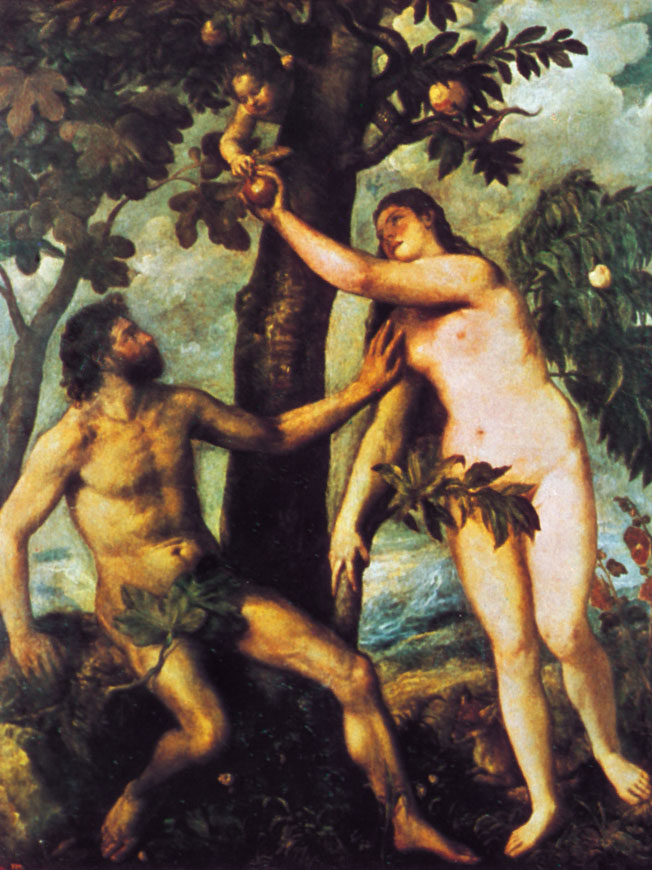
The creation story raises more questions than it can even pretend to answer. So what do we do with it? This was my attempt to preach from outline, but didn’t quite go according to plan
Recently we heard Jesus’ sermon on the mount.
- Murder => anger. Adultry => thoughts. Love your neighbor => love your enemies.
- The letter and the spirit of the law.
- What if the law doesn’t make sense?
Strange little story.
- Out of the ground the LORD God made to grow every tree that is pleasant to the sight and good for food, the tree of life also in the midst of the garden, and the tree of the knowledge of good and evil.
- But all trees are pleasant to sight and good for food.
- POINT – GOD’S STRANGE COMMAND.
- Why does God forbid one tree?
- Why doesn’t God just require the other tree?
- Why is there even a forbidden tree in the first place?
- What do good and evil and death mean here?
God makes the woman as helper/partner for the man.
The serpent, more crafty than any other wild animal that God made.
- Weird question – “did God say you shall not eat from any tree in the garden?”
- Gaslighting.
- How did Eve learn the law?
- Eve is right and wrong. We can eat from any tree, but not the tree in the middle of the garden, nor touch it, or you shall die.
- Eve adds to the law. God didn’t say don’t touch.
- Eve amps up the law out of fear. We don’t really understand what makes it bad.
- Or maybe avoidance is easier. Does avoidance ever fix anything?
- Serpent says “you will NOT die, but God knows that when you eat of it your eyes will be opened and you will be like God, knowing good and evil.”
- Eve sees that the tree is good for food, and a delight to the eyes, and desired to make one wise.
- She took of its fruit and ate; and she also gave some to her husband, who was with her, and he ate.
- Adam is right there with Eve.
- Did Adam speak up against the serpent?
POINT – EVERYTHING THE SERPENT SAYS IS TRUE.
- All the trees ARE pleasant to sight and good for food.
- God says in the day you eat it you will die, but they don’t die.
- Their eyes are opened. Naked.
- They do know good and evil now. Later God says – See, the man has become like one of us, knowing good and evil; and now, he might reach out his hand and take also from the tree of life, and eat, and live forever.
- Now there’s a bunch of blame-shifting. Adam blames Eve. Eve blames the serpent.
- We blame both of them for not just eating from the tree of life all along. Too late. Stuck.
What do we make of this story?
- We want to make this a warning about temptation.
- We want to use this to explain why there’s evil in the world.
- Not such a simple command. There’s nothing obviously wrong with the tree. It all seems so arbitrary. Adam and Eve didn’t really understand the threat. Neither do we.
- Jesus warned us that trying to blindly follow the commandments is like missing the forest for the trees.
- Everything God makes is good. Inevitably we take a bite.
- What if the point here isn’t the commandment or the disobeying.
- What if it’s really a story about what happens when we wake up in a disaster that we don’t understand, without any answers, and blaming is what we do in desperation?
- We don’t want to be where we are now. Outside the garden. In the wilderness. Facing death.
- We are Adam and Eve. This is our story.
Reminds me of a lot of folks I know who are battling heart disease right now.
- Some have ridden themselves pretty hard.
- Bill’s story.
- Story of the guy I interviewed for work.
- How do you reconcile all of this?
- Funny how we know so much, and we really have learned amazing things about the body. Yet so much we don’t know. And we still suffer for it. We still die, even if we feel fine right now.
- What about us? What suffering are we facing right now? What do we regret?
- Maybe we don’t know the difference between good and evil like we think we do.
- All of God’s commandments and yet they’re not enough to save us.
But the good news is that this is not the last word.
- The last word is Jesus, the living Word of God, who does for us what we can’t do for ourselves.
- He suffers and goes to the cross for our sake, but it wasn’t easy for him.
- Jesus knows what it means to face commands that don’t make any sense.
- In the night of betrayal – Father take this cup from me.
- What good is dying?
- Thank God he goes anyway.
- Raises us in his resurrection. Gives us faith.
- We don’t understand how any of this works, but here we are.
POINT – STRENGTH DOESN’T COME FROM TRYING TO BE STRONG LIKE JESUS.
- Strength comes from knowing that Jesus has already been whereever we are.
- We have this story of Jesus being tempted by the devil in the wilderness.
- He’s been fasting for 40 days, which is actually about the point of starving to death.
- So easy to turn stones to bread but he won’t.
- He’s not telling us to do likewise. He’s showing us the fullness of righteousness that he’s giving us.
- He’s on the pinnacle of the temple and the devil tells him to throw himself down and let the angels save him.
- We put ourselves in harm’s way constantly, but even when we do, Jesus will be right there with us.
- The devil promises him the splendor of the world if he would just bow down.
- How often do we run after the things that never last? Yet Jesus always draws us back to himself.
- The point is, sometimes we actually do prevail against temptation. Blessing and joy.
- But when you can’t, know that Jesus will always meet you there with forgiveness.
POINT – WE GIVE STRENGTH TO OTHERS BY REVEALING OUR WEAKNESS TO THEM
- Our neighbors suffer and strive and don’t understand why.
- We don’t have to give them answers.
- When we reveal our own battle scars they can know we’re not alone.
- We become naked, but we don’t have to be ashamed like Adam and Eve.
- It’s the only way they can know they’re not alone or forsaken.
- They’re not beyond Jesus’ reach.
- What gives more hope?
 gracewerks