
Sermon for 3rd Sunday after Pentecost – Mark 4:26-34
Ever notice how Jesus tells a lot of stories about farming? Fig trees. Wheat. Weeds. Vineyards. Now, Jesus always draws a crowd whenever he speaks. A lot of these folks are probably farmers, so Jesus wants to be relevant. He wants to paint a picture that these folks can relate to. Except sometimes he says some pretty weird things. Like in the parable of the sower. A farmer walks along the path scattering seeds. Some fall on good soil, but seems like most fall on bad soil or the rocky path. That’s not efficient, is it? Unless you have seeds to burn or don’t need to eat. I guess we’ve all got different goals. But it’s weird to tell that story to a bunch of farmers. They’re desperate for good crops. They’re not rich and they’ve got mouths to feed. So it’s easy to imagine them getting hung up on what a weird farmer this is.
Then again, what was Jesus’ job before he started his ministry? A carpenter. (Mk 6:3) Not a farmer. So maybe that explains why Jesus says some odd things about mustard seeds in today’s Gospel reading. Like that the mustard seed is the world’s smallest seed. It’s not true. Back in the day, farmers had smaller seeds. They knew better. Here’s another thing. Jesus talks about sowing mustard seeds. No one did that. The seeds rapidly germinate and start growing almost immediately. And the plants are notorious spreaders. Ancient botanists wrote that once sown you really couldn’t get rid of them, like an infestation. Like kudzu. Messing with THESE seeds is like opening Pandora’s box. So do you think the farmers in the crowd are giving Jesus a little side eye by this point?
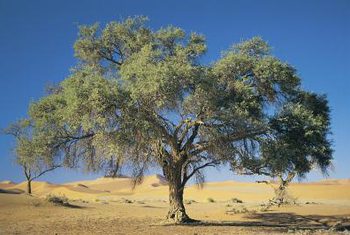
But it gets weirder. Jesus says that these grow into the greatest of all shrubs, where the birds of the air can nest. Now, these ARE big shrubs. They can grow 10 to 15 feet tall. Birds could nest. But what do you get when you have a flock of birds congregated in one spot? You get a lot of noise, and a lot of poop. Want to sit in the shade of THAT shrub? If THAT’S the kingdom of God, then who wants it? It’s a mess.
So does this parable sound a little sketchy, or is Jesus not telling us the whole story? Well, our gospel according to John says that “with many such parables he spoke the word to them. He did not speak to them except in parables.” But the gospel of Matthew is harsher. “The reason I speak to them in parables is that ‘seeing they do not perceive, and hearing they do not listen, nor do they understand.’” (Mt 13:10–14) How’s that fair? Why can’t Jesus just tell us the plain truth?
Well, here’s the thing. He IS telling us the plain truth. He’s telling us that we don’t understand the kingdom of God. Because we don’t want a good-for-nothing shrub. We want what Ezekiel prophesied. “Where God plants a noble cedar on the mountain height of Israel. A massive tree bearing fruit. And all the lowly trees of the field shall know that I am the Lord.” Ezekiel is talking about God manifested in strength and glory. So glorious that evildoers would fall to their knees and knock off their foolishness. Who wouldn’t want that? I mean, look around. Politics. Racism. Vaccine wars. Amazon is the richest company on the planet and keeps getting richer but folks on the line can’t get a simple bathroom break. Are you as tired of it as I am? Some folks say, “If you’re not outraged, you’re not paying attention.” We need massive change from God and we need it now.
Except it never seems to come, at least not that we notice. So maybe we get resentful. And that resentment has to go somewhere, right? Like toward those folks who we think are part of the problem. Folks who don’t understand like we do. We argue with them. We show them the facts. Do they listen? No, they double-down and fire back. So we just keep escalating. Or if we hate fighting, maybe we just cut folks off because it’s easier. Just edit them out of our lives. Or maybe we bite our tongue because it’s not worth the argument. But some folks say if we’re not a part of the solution, then we’re a part of the problem. So what’s the answer?
The good news is that Jesus tells us the answer. The kingdom of God like a mustard seed. He’s talking about himself. Jesus is the mustard seed, the smallest, most humble seed of all. In utter humility he goes to the cross, to suffer and die and be buried in a tomb. But still he rises, in the glory of his resurrection. So Jesus says, “when this seed is sown, it grows up and becomes the greatest of all shrubs.” He becomes the dream and the hope of everyone who have ever been enslaved or oppressed, because THAT’S when you need to know beyond a doubt that the kingdom of God is arising. Arising in defiance of politics or racism or even Amazon. The only way you can even recognize the kingdom in the first place is when you find yourself unconditionally welcomed into it, just as you are, because it’s the place where you find yourself unconditionally welcomed into it, just as you are, with dignity and forgiveness.
When that happens, it’s hard to keep quiet about it. So we share this good news with others, because it’s too good to keep to ourselves. And word spreads. This is why Jesus talks about mustard seeds. Remember, they start growing almost immediately. They’re notorious spreaders. You can’t get rid of them. They’re like an infestation. But this is the kind of infestation we can give thanks for. Because we don’t have to argue with anyone anymore. We tried that. It didn’t work. But now we can just let the word do all the work, and trust the kingdom of God to sprout in our midst. And then the words just start coming out of our mouths. Little seeds of hope, and mercy, and forgiveness. They seem like nothing, but these are the mustard seeds that sprout the kingdom in all its fullness. That’s what happens when the Spirit makes faith in us. Not that we’ll notice what’s happening, but other people will. Sure, the world keeps telling us that talk is cheap, but Jesus never had much use for worldly wisdom.
Now, you can’t have good news without bad, so here’s the bad news. Living in the kingdom is hard. You’ll start seeing suffering and injustice everywhere you look. Authorities throwing their hands up. Laws that fall short. It’s too much to bear. So Jesus shows us that the kingdom always sprouts up from the ground, where folks like you and me live. In God’s kingdom, strangers become real people with names and stories and families, and we have a stake in their lives. In God’s kingdom we know our neighbors and can’t help but care for them. In God’s kingdom, love is the fulfilling of the law.
Wow. We’ve got a lot of power. But before we let it power get to our heads, let us remember one little thing from our Small Catechism. The kingdom comes even without our prayer, but still we pray, “come to us also!” The kingdom is God’s good gift to us so that all people would have abundant life right now. God is the one at work in us for the sake of the world. You know, God doesn’t have to do it this way. But thank God for loving us so much that God wants to.
 gracewerks