
Sermon for All Saints Sunday – John 11:32-44
I began with a conversation about procrastination, check out the recording to hear.
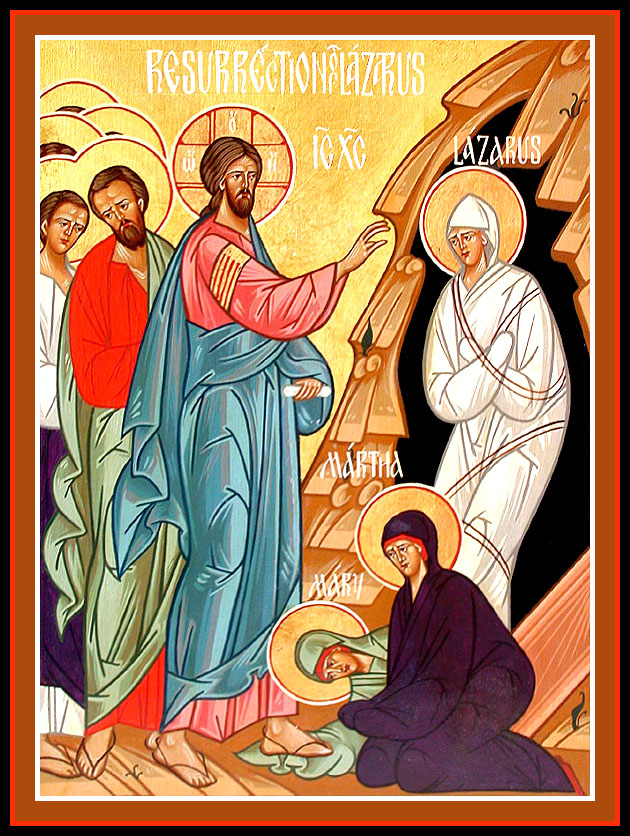
You know who else is a procrastinator? Jesus. Except when Jesus procrastinates, it raises a lot of questions.
So, Jesus is out by the River Jordan, and he gets an urgent message from his friends Mary and Martha. Mary and Martha and their brother Lazarus are some of Jesus’ best friends. He loves them dearly. And this message should devastate him. “He whom you love is ill.” So you’d expect him to drop everything and go. That’s what we do for the people we love, right? But he doesn’t. Instead, he says something strange. “This illness doesn’t lead to death. It’s for God’s glory, so that the Son of God may be glorified through it.” What does he mean? Because we know Lazarus dies. What Jesus means is that he’s going to use Lazarus’ suffering as a way to reveal who he is. Because Jesus has a PR problem. Folks aren’t getting that he’s the Son of God. What better way to prove it than to raise someone from the dead? Now, that’s quite a demonstration! But there’s a big hitch. Someone’s got to be dead. This really should bother us a lot. The gospel even says – though he loved Mary, Martha, and Lazarus, he stayed two days longer. That doesn’t feel like love. Every shred of compassion in us should be screaming that this is NOT ok.
But he deliberately waits until Lazarus is good and dead. Then he goes to Mary and Martha. Martha hears he’s on the way, she runs to find him, and says, “Lord, if you had been here, my brother would not have died. But even now I know God will give you whatever you ask.” But she has no idea what Jesus has planned. What Martha’s saying is that Lazarus was the one who provided for us. He gave us a home and kept us fed. You let him die. You’re going to take care of us now, right? Because we know Martha. She’s practical. Back then, for a Jewish woman, marriage meant security. If you didn’t have a husband or family to take care of you, things were precarious. There’s a reason Torah talks so much about widows and orphans. Then Martha goes and tells Mary. Mary comes and says the same thing. “Lord, if you had been here, my brother would not have died.” Jesus sees her grieving and wailing. He sees their neighbors grieving and wailing. It’s too much. Jesus weeps. He’s greatly disturbed in spirit and deeply moved. But you wonder if he’s just weeping for them, or because maybe he pushed the envelope too far this time?
Some of the folks there see Jesus weeping, and think “wow, he must have really loved Lazarus.” But a few get angry. “Wait, he just healed a blind stranger, but he lets his friend die?” So Jesus is under suspicion here. And he knows it. He’s got to finish this thing out. So they go to the tomb. Martha says, “Lord, already there is a stench because he has been dead four days.” Because stones aren’t airtight. They can all smell Lazarus. Jesus says, “Didn’t I say that if you believed, you would see the glory of God?” He looks upward and makes sure they all hear him pray to God “so that they may believe that you sent me.” He yells, “Lazarus come out!” And out he comes. All wrapped up like a mummy, stink to make anyone gag, but he’s really alive.
So Jesus did what he promised. It’s a miracle! The story goes on to say that they all believed in Jesus after this. Mission accomplished. But at what cost? Was Lazarus just a means to an end? I mean, what do they believe, that Jesus is the Messiah of the whole world, or just that he can cure the lucky few? Because those aren’t the same thing. That’s always the problem with Jesus’ miracles. They draw a crowd, Jesus does his thing, but then he asks his disciples what they’re hearing in the crowd. Who do they say I am? The disciples answer Elijah, or a prophet, or John the Baptist risen from the dead. Folks see what they want to see. And what about all the folks that Jesus doesn’t get to heal? They’re out of luck. So maybe Jesus is glorified, but it feels a little one-sided. A little unfair.
It’s worse for Lazarus. Word spreads. Folks come to Jerusalem for Passover, but also to see Lazarus back from the dead. The authorities hear about it and decide to kill Lazarus once and for all, because on account of him, folks are deserting and believing in Jesus. Lazarus didn’t ask to be raised, but now he’s as good as dead. It’s Jesus’ fault, and hard to imagine Jesus didn’t see this coming. It’s strange. Even with faith, we struggle when the saints in our own lives pass away. Where was God for them? We make excuses for God. Maybe God needed another angel in heaven. Maybe this is all a part of God’s plan. Maybe this is for the best. But is it? How do we know God’s not just using us like pawns in some strange game that always ends the same way?
Even for Jesus. On the cross he cries out “My God, why have you forsaken me?” He knows exactly how we feel. And he dies. But after three days, he rises from the dead. Because Jesus knows everything needs to change between us and God. He knows our questions and fear and doubts, and he does something about it for our sake. Whether we want him to or not. He didn’t ask Lazarus for permission, and he doesn’t ask us either. He doesn’t have time for that. He can’t procrastinate. So he binds all our struggles and suffering to his own body, so that he can bind his resurrection to us. He has to die and rise so that we could know that we will all rise with him. Jesus gives everything he is and has so that we might belong to God forever, through no fault or merit of our own.
Though that doesn’t make things easy. Our passage from Revelation promises that “He’ll wipe every tear from their eyes. Death will be no more; mourning and crying and pain will be no more, for the first things have passed away.” It promises us what, but not when. We know there will be tears and pain. Faith is hard. You all know it as well as I do. But faith raises us with a power that we call hope. Hope for the gift of another day in community. Hope that God didn’t bring us this far just to abandon us. Hope that God really is making all things new before our eyes, in spite of all the evidence to the contrary. Hope doesn’t come when things are easy. It only comes when things are hard, because that’s how you know the difference between hope and convenience.
So maybe we don’t need to worry about tomorrow. Jesus says “tomorrow will bring worries of its own.” I mean, Lazarus had no idea the authorities were plotting against him. We have no idea if they even followed through. We don’t know what kind of unwanted attention Lazarus and his sisters had to deal with. You think paparazzi are bad? Just ask the guy who was raised from the dead. All we know is that Mary and Martha gave a dinner to celebrate with Lazarus, Jesus, and the rest of the disciples – even Judas the betrayer. But it didn’t matter. They had their brother. They had the day with Jesus. And so do we.
 gracewerks