
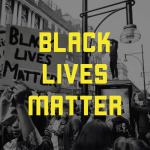
Resources for Learning about Institutional Racism

Resources for Learning about Institutional Racism

As white folks, when we learn about racism, we often focus on what I call “personal racism”, where we explore questions like:

  • How do stereotypes influence my own words, thoughts, and actions?
  • What messages did I learn from childhood, though my family of origin, community, or schooling?
  • What are my biases?
  • What are some strategies that I can use to treat people of color with fairness and respect?
  • What is white privilege, and how can I use my privilege in order to benefit people of color?
  • What are microaggressions and how do I become more aware of them?

Granted, these are just a few of the questions and challenges that we face as white folks who grow up and spend our lives in a society that continues to echo the legacy of slavery and to perpetuate the idea of whiteness. Throughout our lives, we continue to repent and to wrestle with all this.

However, there is another massive dimension of racism which demands just as much attention – “institutional racism.” Here, we refer to the ways that our laws, institutions, and social services somehow favor white folks over people of color. This is a controversial topic, because as white folks, we carry a deep-seated belief that folks are treated fairly regardless of color or ethnicity. However, the daily experiences of our black and brown neighbors demonstrate that this is not true.

A good example is the issue of voter IDs. On the surface, it seems reasonable to require that folks produce an certified photo ID in order to vote, especially when I can get a photo ID without much inconvenience. But, is this really everyone’s experience?

Continue reading

Practicing Awareness, with Richard Rohr

I’ve recently been reading Richard Rohr’s The Naked Now, another of his many books and resources for contemplative spirituality. These days I acknowledge my bent toward contemplation (but please don’t mistake me for a devotee of Schleiermacher), just as I grow stronger in my confessional identity (thanks to Luther and Melancthon). And so, I admit to entertaining Rohr somewhat skeptically. I don’t love his overt weaving of non-Christian theology into his take on Christian spirituality. I suppose that’s borne from my feelings that so many people kidnap Scripture and weave embedded theologies that seem so self-destructive. I hate to bring in non-Christian sources when we can’t even seem to get Scripture right.

Yet, I do recognize the importance of keeping somewhat open-minded, in order to discover elements from Rohr that can have rich meaning for my own experience of faith. With that, I was reading Rohr’s Appendix 4 – “Practicing Awareness.” He offers a 4-step method for a form of centering prayer, and I felt so moved to reflect on it here.

Continue reading

Seeking My Vocation

I recently wrote about learning my spiritual and personality types. Along the way, I gained some insight into how I perceive God, and how that begins to establish my identity in the Body of Christ. But, I’m seeking answers to larger questions. I perceive God calling me to commit my life to serving the church and this broken world. But, what does that mean for my engineering career? And “service” can mean so many different things. Just what is God calling me to do?

Continue reading

Discovering My Spiritual Type and the Myers-Briggs

Currently I’m taking the Practical Ministry I: Biblical Images course of the Diakonia Program. The course investigates the Lutheran concept of vocation, and introduces the concept of spiritual gifts having been bestowed upon each of us in diverse combinations. The “Biblical Images” part of the course is there too, but it’s an entire discussion for another day. It happens that I’ve been experiencing something of an identity crisis in recent years. I’ve been struggling with deep questions about my own sense of vocation and identity within the Body of Christ. Perhaps it’s more than coincidence that I find myself now being led through something of a more formal self-examination. Wily Holy Spirit indeed! Continue reading

Response to The Rapture Exposed

For one who has never given much thought to the Apocalypse, it can be easy to toss it into a mental trash bin labeled as “unimportant questions and stuff.” The Rapture Exposed introduces the cultural phenomenon of Left Behind and the pressing threat and popularity of dispensationalism. Barbara Rossing’s book captivates the reader with stories of emotional turmoil suffered by people raised in the culture of rapture belief. Rossing goes beyond discussing culture, to provide a thoughtful commentary on Revelation. Through the book, Rossing ties her insight to American foreign policy in the Middle East. This paper is a reflection on the impact of each of these themes. Continue reading