Promises Suck…… Except for One.

Sermon for 13th Sunday after Pentecost – Joshua 24:1-2a, 14-18

Promises suck. They’re easy to make, but are they easy to keep? If I had a nickel for every time I said “yes” and regretted it. But you want to make people happy. You want to be dependable. But what happens when the rubber meets the road? Have you ever begged off? Even if you have a good reason, it feels bad, right? We do it with ourselves too. Back when Covid hit, my company decided to let us work remotely. It’s great. I can just camp out on the sofa with my laptop. I don’t have to drive anywhere. No distractions. It’s great for the company, but no so great for my body. I’m not running to the lab or hunting down folks with questions. I’m just sitting. So I got worried and started walking around the neighborhood every day. I even bought a fancy fitness tracker. But then I got busy. Deadlines. Maybe I’ll skip today. And the next day. And you know where this is going. So if we can’t keep our word with something simple, what about when it’s harder?

That’s what Joshua’s worried about, in our Old Testament reading today. So, the Israelites have finally gotten to the land that God promised them. It took DECADES. Wandering the desert. Fighting a laundry list of enemies along the way. Never sure if they could trust Moses or the God who put them through all of it. But God was always faithful. They’re here. They’re settling in. Things are great. Joshua should feel relieved, right? But he’s not. He’s worried about what the Israelites will do next. Because he’s very old, about 110. He knows God’s about to take him away. He won’t be there to guide them, so this is his last chance to get them to make a commitment.

Continue reading

What If Wisdom Isn’t All That Great After All?

Sermon for 12th Sunday after Pentecost – Proverbs 9:1-6

How smart do you think you are? How about wise? Are those actually the same thing? I feel pretty smart. But I manage a team of folks, and humans are usually pretty complicated, so I usually wish I was wiser. Though, I’ve also been watching the CNN documentary series “Jerusalem: City of Faith and Fury”, where they discussed that old story about “wise” King Solomon, to whom 2 women brought a baby and both claimed to be the mother. So Solomon suggests cutting the baby in half, so they could “share”. Naturally the true mother speaks up in the nick of time. Of course, when you’ve absorbed that story over decades, it becomes ingrained to think “yup, that was pretty wise.” But, after watching the documentary, it now occurs to me, “what a deranged story!” So, maybe not THAT kind of wise!

But after studying our reading from Proverbs this morning, I’m not sure wisdom’s all it’s cracked up to be. In Proverbs we actually meet Lady Wisdom. So the first question is, who the heck is Lady Wisdom? I mean, if we believe in a Holy Trinity, with Father, Son, and Holy Spirit, then where does Lady Wisdom fit in? She does sound a lot like the Holy Spirit. She talks about right and wrong. She talks about righteousness. She calls us. In the chapter before this, she even says, “The Lord created me before the beginning of the earth and the heavens. Then I was beside him, like a master worker, and I was daily his delight.” Now, that gets a little weird, because Father, Son, and Holy Spirit are co-eternal. Together from the start. Theologians love to argue about this stuff. But what really matters is that she’s got something important to say to us. “For whoever finds me finds life, and obtains favor from the Lord.”

And she’s determined to be heard. “On the heights, at the crossroads she takes her stand; at the town gates she cries out.” (Prov 8:2-3) When you want to get your message out, you go to where the people are. And she’s not shy. She raises her voice and says, “To you, O people, I call, and my cry is to all that live.” Then she starts to preach. “All the words of my mouth are righteous; there is nothing twisted or crooked in them. Take my instruction instead of silver, knowledge instead of gold, for wisdom is better than jewels, and nothing you desire can compare.” She’s got a pretty high opinion of herself, right? But she’s got a point. I mean, wealth comes and goes. You can’t take it with you when you die. It brings unwanted attention. Ask lottery winners. Folks start coming out the woodwork and they always want something. It’s hard to know who to trust. Do folks like you for you, or just because you’re rich?

Continue reading

The Miracle of a Nap and a Snack, or That Time When Elijah Went off the Rails

Sermon for 11th Sunday after Pentecost – 1 Kings 19:4-8

Have you ever met a zealot? Not just opinionated. Not just passionate. It’s like being fixated. Obsessed. It happens a lot with politics and religion. Maybe food or music. Folks that are always itching for an argument. God have mercy if they find out you disagree, because then they’ll go out of their way to nag you about it. You learn really quickly what NOT to talk about, right? All that outrage just feels exhausting. Besides, don’t you catch more flies with honey than vinegar? Sometimes prophets can be zealots. I remember one of my OT professors preaching on Jeremiah once, and she said, “sometimes you might be a prophet, and sometimes you might just be a jerk.”

Today we’ve got a story about Elijah. Now, sometimes he can be really compassionate, like with the widow of Zarephath. She and her son are starving and he performs a miracle so that they’ll never be hungry again. One of my favorite stories. But then there are stories like today’s reading, where he goes off the rails a bit. Now to be fair, Israel’s a hot mess. It’s always been that way. King after king takes the throne and scripture says the same thing every time. “The king did evil in the sight of the Lord more than all who were before him.” They never learn. So right now it’s King Ahab on the throne, and he’s a real piece of work. He marries Jezebel because she’s a Phonecian princess, and Ahab wants to finagle a political alliance. Phonecians worship Baal, the god of rain and thunder and lightning. Baal makes your crops grow. And Ahab cares a lot more about politics than the God of Israel. So Ahab and Jezebel start building temples to Baal, like the Starbucks of ancient Israel. What do you think God thinks about all this?

Continue reading

The Difference between True Peace and Blind Trust

Sermon for 8th Sunday after Pentecost – Ephesians 2:11-22

This week I’ve been assisting the Lutheran Deaconness Conference to host their annual meeting on Zoom. With 140 or so guests in one meeting, it makes for a pretty exciting and action packed time behind the scenes! At any rate, one of the things that fascinates me about the LDC, is that their membership is fairly equally split between the ELCA and the LCMS – two Lutheran denominations (there are a number of them, actually) which haven’t been known to play nicely with each other, for a variety of reasons (full disclosure, I’m a member of the ELCA). Yet, this is a large community of folks who are deeply committed to a thriving community that demonstrates honest grace. So, what makes this kind of gracious community possible?

Well, St. Paul has some thoughts about it in our reading from his letter to the Ephesians. From the way Paul talks about them, they sound like the perfect church. It’s a time of blessing (1:3). They’ll make the wisdom of God known to rulers and authorities (3:9-10). Paul’s heard of their faith and constantly gives thanks for their example (1:16). That’s high praise. Compare all that to some of Paul’s other letters where he rails about heresy, scandal, persecution, gossip – a laundry list of issues. If only we could all be like the Ephesians!

But there has to be a catch, right?

Continue reading

When We’re Stuck Between a Rock and a Hard Place

Sermon for 7th Sunday after Pentecost – Mark 6:14-29

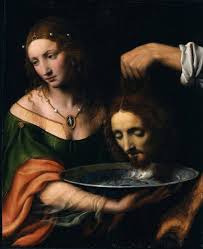
The gospel of the Lord? Really? Herod sends a soldier to chop off the head of John the Baptizer. They bury his body. The end. What a messed up story! But Herod’s involved, so we shouldn’t be surprised. Let’s remember who Herod is. This is Herod Antipas (AN-ti-puhs). His dad was Herod the Great. Dad’s ruthless, murderous, paranoid. When Jesus was born, he hears a rumor that the king of the Jews has come into the world. But HE’S supposed to be the king of the Jews. This is a threat! So he orders the slaughter of all the male infants in the kingdom. What kind of maniac does that? Daddy. When that’s your parental role model, do you think you might have a few issues? Here’s another. One day, this Herod, the son, goes off to Rome to visit his brother Philip, wife Herodias, and daughter Salome. He likes what he sees and steals Herodias away to be his wife. But he takes Salome too, because family values.

Now, here comes John the Baptist. He’s a prophet. That means he’s all about speaking truth to power. His mouth gets him in trouble. But he doesn’t know when to shut up. He goes and tells Herod like it is – you stole your brother’s wife. You’re breaking God’s law. Herod should be furious, right? But get this – Herod still likes John anyway! “When he heard him, he was greatly perplexed; and yet he liked to listen to him.” Go figure. Herodias on the other hand, she wants John dead. John’s message REALLY gets under her skin. So if we read between the lines, maybe she didn’t exactly MIND Herod stealing her away. Now, imagine the bedroom fight. Herodias wants John dead, Herod wants John alive. But Herod’s smart. Put John in prison. It’ll get Herodias off his back AND keep John around. Mission accomplished! Maybe he even thinks John should be thankful. At least he doesn’t have to eat locusts in the desert anymore, right?

Continue reading

Telling the Truth about Weathering the Storm, or That Time When Jesus Was Pretty Unlikeable

Sermon for 4th Sunday after Pentecost – Mark 4:35-41

Were you afraid of the dark as a kid? I was. We lived out in the country, where there weren’t streetlamps, so when it was dark, it was really dark. My bedroom was at the end of a long hallway, so going to bed was always traumatic. And my parents were always so frustrated with me. “What’s wrong with you? There’s nothing to be afraid of!” But even if we trusted our parents to tell the truth, somehow that wasn’t enough. We were so convinced there was some monster out there ready to attack us.

Continue reading

The Kingdom of God Arising, Here and Now, from the Ground Up!

Sermon for 3rd Sunday after Pentecost – Mark 4:26-34

Ever notice how Jesus tells a lot of stories about farming? Fig trees. Wheat. Weeds. Vineyards. Now, Jesus always draws a crowd whenever he speaks. A lot of these folks are probably farmers, so Jesus wants to be relevant. He wants to paint a picture that these folks can relate to. Except sometimes he says some pretty weird things. Like in the parable of the sower. A farmer walks along the path scattering seeds. Some fall on good soil, but seems like most fall on bad soil or the rocky path. That’s not efficient, is it? Unless you have seeds to burn or don’t need to eat. I guess we’ve all got different goals. But it’s weird to tell that story to a bunch of farmers. They’re desperate for good crops. They’re not rich and they’ve got mouths to feed. So it’s easy to imagine them getting hung up on what a weird farmer this is.

Then again, what was Jesus’ job before he started his ministry? A carpenter. (Mk 6:3) Not a farmer. So maybe that explains why Jesus says some odd things about mustard seeds in today’s Gospel reading. Like that the mustard seed is the world’s smallest seed. It’s not true. Back in the day, farmers had smaller seeds. They knew better. Here’s another thing. Jesus talks about sowing mustard seeds. No one did that. The seeds rapidly germinate and start growing almost immediately. And the plants are notorious spreaders. Ancient botanists wrote that once sown you really couldn’t get rid of them, like an infestation. Like kudzu. Messing with THESE seeds is like opening Pandora’s box. So do you think the farmers in the crowd are giving Jesus a little side eye by this point?

Continue reading

How Do We Know If We’re Born of the Spirit?

Sermon for Holy Trinity – John 3:1-17

What if you could rewind your life? What would you change if you could do everything over again? Would you make different choices? As I come to terms with middle age, those questions pop into my head a lot more. Why didn’t I save more for retirement? Why did I waste my 20s? Why didn’t I travel more? Can you relate? Facebook doesn’t help because you see what other folks your same age are accomplishing, and you start comparing yourself. But I’m an optimist. I like to think that I’ve learned a lot. That I can make smarter choices. Maybe stop watching Facebook so much. Except, how do I know I’m really making better choices? I don’t know about you, but I wish I had some kind of sign that I’m really going in the right direction.

Our gospel reading has a lot to say about this. How can we know if we’re going in the right direction? That’s what Nicodemus wants to know. So he goes to Jesus because he’s looking for a sign, and he believes Jesus can set him straight. Now, we don’t know Nicodemus’ life story. We don’t know what he’s proud of or what he regrets. But we know he’s a Pharisee, and not just any Pharisee, but a leader of the Jewish community. That tells us a lot about him. He’s smart. He knows scripture backwards and forwards. He works hard to obey God’s commands, because a lot of eyes are on him. He should feel confident, right? Yet Jesus must have something he wants, otherwise he wouldn’t be sneaking by night to talk to Jesus. So maybe being a Pharisee isn’t all it’s cracked up to be.

And he figures Jesus must be suspicious, so he tries to butter him up first. “We know you’re a teacher come from God, because there’s no other way you could do these amazing signs.” That’s what Nicodemus wants. He wants a sign, because he feels uncertain. Signs give direction. So this is him telling Jesus, “I know you can tell me which way to go, because I’m not sure.” That’s an impressive confession coming from someone in power. But then Jesus launches into this crazy theology lecture. “No one can see the kingdom of God without being born from above.” Nicodemus is like “huh?” Honestly, we should feel confused too. Because these are heavy thoughts. I mean, ask 100 different Christians what Jesus means here, and you’ll get 100 different answers. Now, Nicodemus is kind of a literal thinker. He asks, “how can anyone be born again? You mean, like, crawl back in?” Mothers in the room, what do you think?

Continue reading

God for ALL of us – a Radically Inclusive Gospel

Sermon for Pentecost – Acts 2:1-21

FYI – I recommend listening to the recording because I improvised the opening paragraph below….

What’s your secret power? What’s something that you know or can do that no one would ever expect? SHOW CROSS STITCH. EXPLAIN WHY I ENJOY THAT HOBBY. Folks are always surprised when they find out about my hobby. Isn’t it weird how folks pigeonhole us? Why do they do that? Make all sorts of assumptions about what we can or can’t do. Folks thought I was an art major in undergrad. Folks thought I was a restaurant server in the pride band. On the one hand, it can be fun to surprise people. But other times being pigeonholed is hard. You get left out of things, or dismissed.

Jesus’ disciples knew all about being pigeonholed. A lot of them were from the region of Galilee. Which wasn’t a spectacular place. A few cities, but mainly a bunch of little country towns. Kind of like Indiana outside of Indianapolis. But it’s diverse. You can find Jews, Samaritans, and even Gentiles. They’ve got plenty of synagogues. They’ve even got Pharisees. So Galilee isn’t some backwater place with full of rednecks. They know a thing or two about religion and culture. But down south in the big city of Jerusalem, folks don’t care for their Galilean cousins from up north. They think Galileans are backwards. They don’t know Torah. They’re superstitious. They’re bad Jews. Basically, they’re trash because they’re not from Jerusalem. Folks from Galilee are all pigeonholed like this. Like someone said, can anything good come out of Nazareth? Because you know how they are.

Continue reading

If We Can’t Agree on the Truth, What Do We Do?

Sermon for 7th Sunday of Easter – John 17:6-19

In the world but not of the world. Have you ever heard that phrase? What does it mean? Like holding ourselves to a high standard. Being disciplined. Abstaining from worldly influences. It is a good way to be popular? Probably not. I remember when I was in high school. My family was Catholic, but we never went to church. But then a classmate down the street invited me to her Baptist youth group. So I went, and I had a great time. I really got sucked into the group. It gave me a real awakening of faith. Now, a big part of the culture was to be strong for the Lord. No drinking or smoking or sex. You could only listen to Christian music or watch Christian TV. You had to be careful who you hung out with so you wouldn’t be led astray. I was ok with that because I felt like I was being a true disciple. Except then I graduated and went to a Lutheran university, and it was all depravity from there…. (just kidding!)

In the world but not of the world. For a lot of Christians, this means that you’re trying to follow Jesus. To be pure and holy. But you’ve got a problem. You’re stuck in this broken world that keeps derailing you from your mission. The world’s full of strife. Politics. Racism. Mask-wearers versus anti-maskers. What we think about the police. So many issues, which may not seem religious, but a lot of folks believe this is supposed to be a Christian nation, so everything starts to feel religious. You pick the “right” side and avoid folks on the other side because they’re a bad influence.

But something seems off about that kind of avoidance. We don’t remember Jesus avoiding anyone. He was drawn to sinners and called them friends. So “in the world but not of the world” becomes more of an internal thing. Where it’s ok to have friends we disagree with, as long as we stand up for truth. Because maybe it’ll rub off on them. Or so we hope. Except, I don’t know about you, but friendship seems a lot harder these days. Or even getting along with co-workers or family members. Folks seem a lot less guarded about what comes out of their mouths. We’ve really got to watch what we say, so we don’t trigger those folks who disagree with us. We want to avoid arguments. We want to avoid risking our relationships. So, “in the world but not of the world” feels like it’s still about avoidance, but now we just avoid rocking the boat.

Continue reading